My work explores the infrastructure behind deep learning (DL) training and reinforcement learning (RL) post-training: how to make large-scale workloads more efficient, balanced, and elastic.
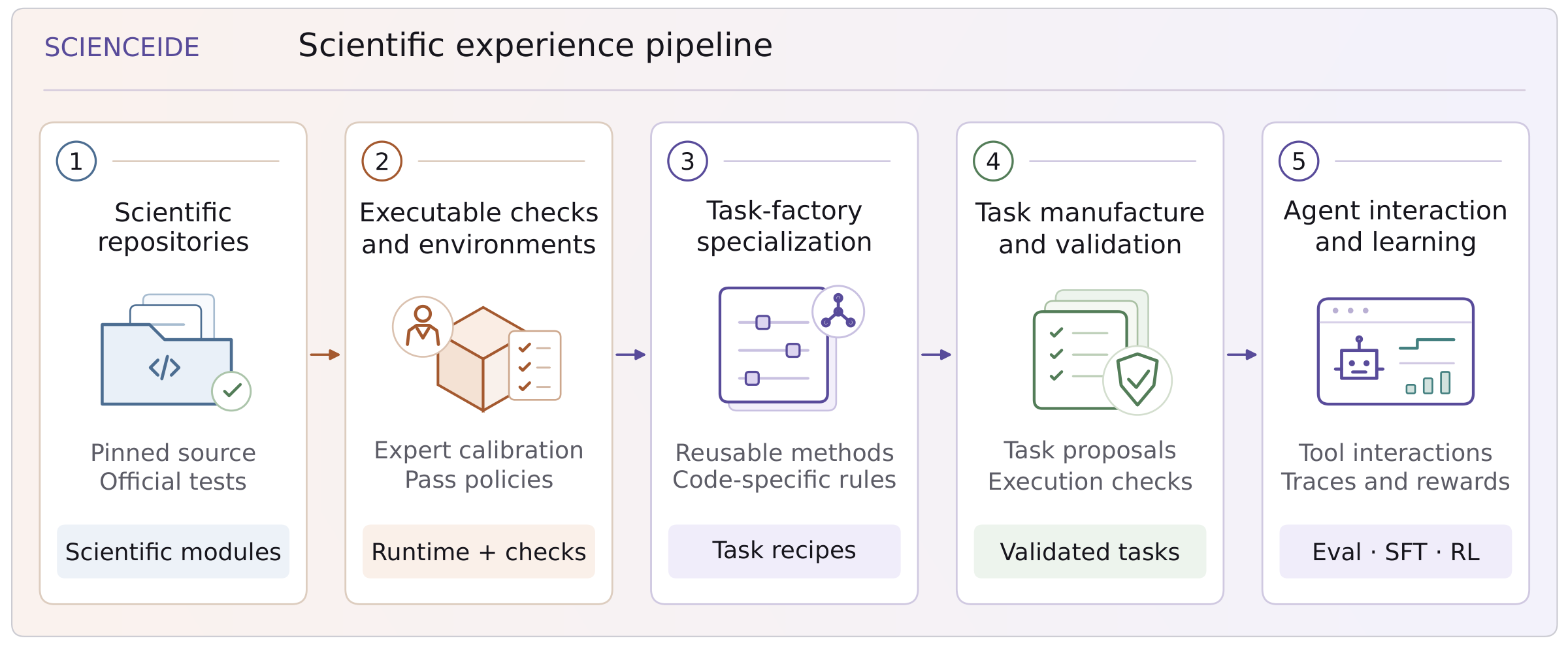
Turning scientific code into verifiable environments for agent learning.2026
Hejia Geng*, Zesen Huang*, Haoyang Li, Wenbin Li, and others
Key contributions+
ScienceIDE turns scientific code repositories into programmable environments for scientific agents. Guided by expert-defined cases and acceptance criteria, it supports task generation, execution, and verification, creating a shared substrate for supervised fine-tuning, reinforcement learning, and evaluation.
Shifting GPUs between rollout, rewards, and training as workloads change.2026
Yanfeng Zhao*, Haoyang Li*, Sheng Lin, Yuming Zhou, Jiawei Jiang, Bin Cui, Fangcheng Fu
Key contributions+
PivotRL dynamically shifts GPU resources among policy rollout, generative reward evaluation, and policy training as their workloads change. A shared parameter store, shift-aware scheduler, and throughput-aware planner make role migration fast while preserving RL convergence.
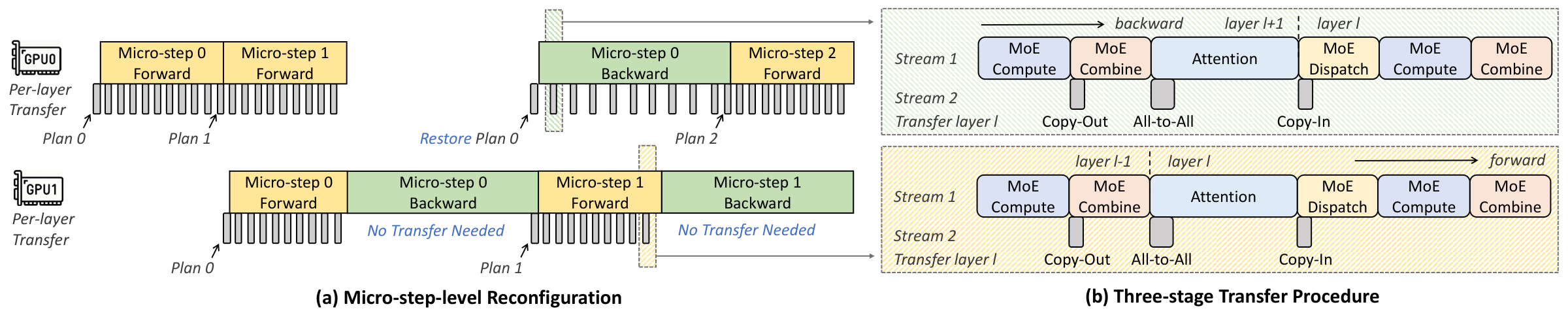
Using routing foresight to rebalance MoE experts at each micro-step.2026
Yuming Zhou*, Haoyang Li*, Sheng Lin, Yanfeng Zhao, Tong Zhao, Xupeng Miao, Jie Jiang, Fangcheng Fu, Bin Cui
Key contributions+
ForeMoE uses routing information from the rollout stage to anticipate expert demand during later RL stages. A hierarchical planner and overlapped expert transfer engine enable frequent micro-step reconfiguration and improve MoE post-training throughput.
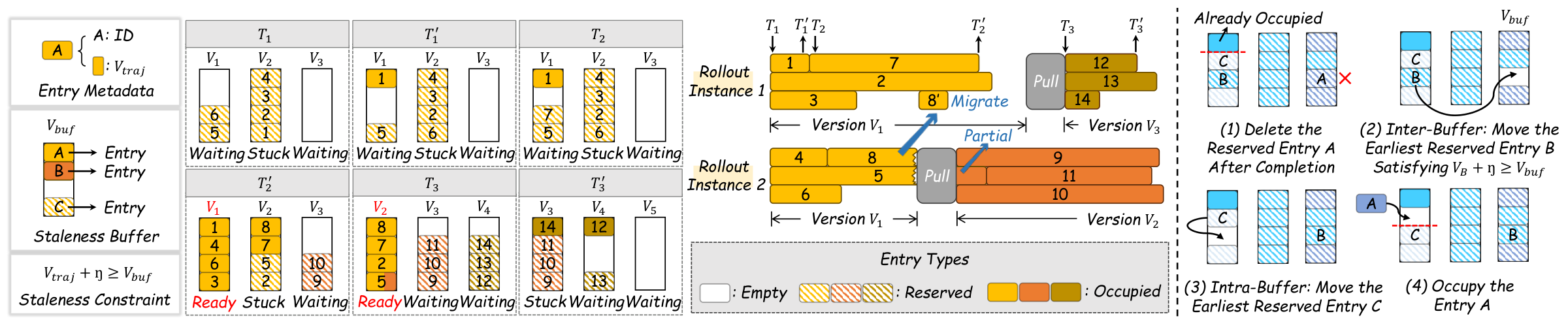
Keeping asynchronous RL training balanced while controlling trajectory staleness.2026
Haoyang Li*, Sheng Lin*, Fangcheng Fu, Yuming Zhou, Xiaodong Ji, Yanfeng Zhao, Lefeng Wang, Jie Jiang, Bin Cui
Key contributions+
StaleFlow jointly addresses trajectory staleness and workload skew in asynchronous, fully disaggregated RL post-training. It combines a global consistency protocol with trajectory and parameter data servers, achieving higher throughput without compromising convergence.
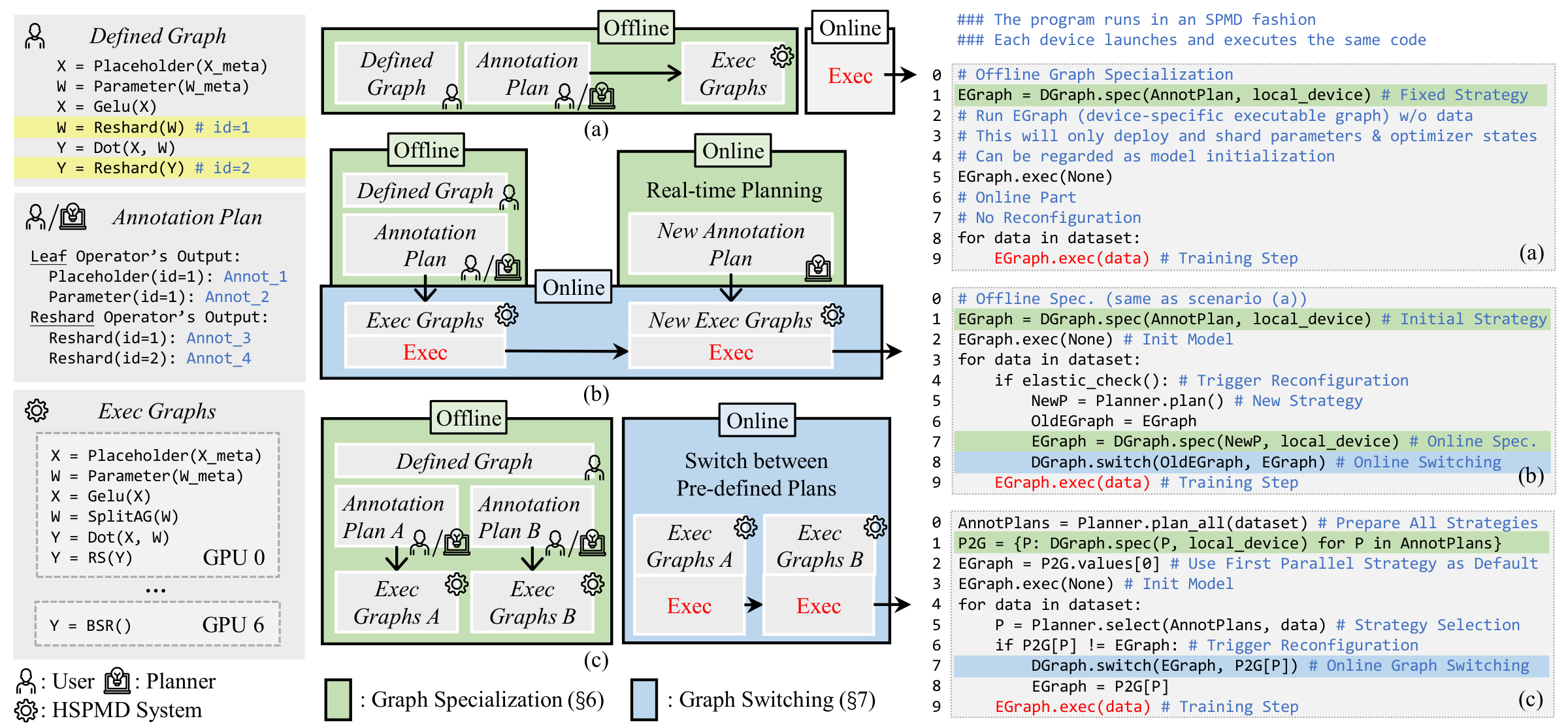
Expressing heterogeneous parallel execution through a unified SPMD program.2025
Haoyang Li, Fangcheng Fu, Hao Ge, Sheng Lin, Xuanyu Wang, Jiawen Niu, Xupeng Miao, Bin Cui
Key contributions+
Hetu v2 extends the SPMD programming model with hierarchical and heterogeneous annotations for modern distributed training. HSPMD handles spatial heterogeneity through graph specialization and temporal heterogeneity through dynamic graph switching.
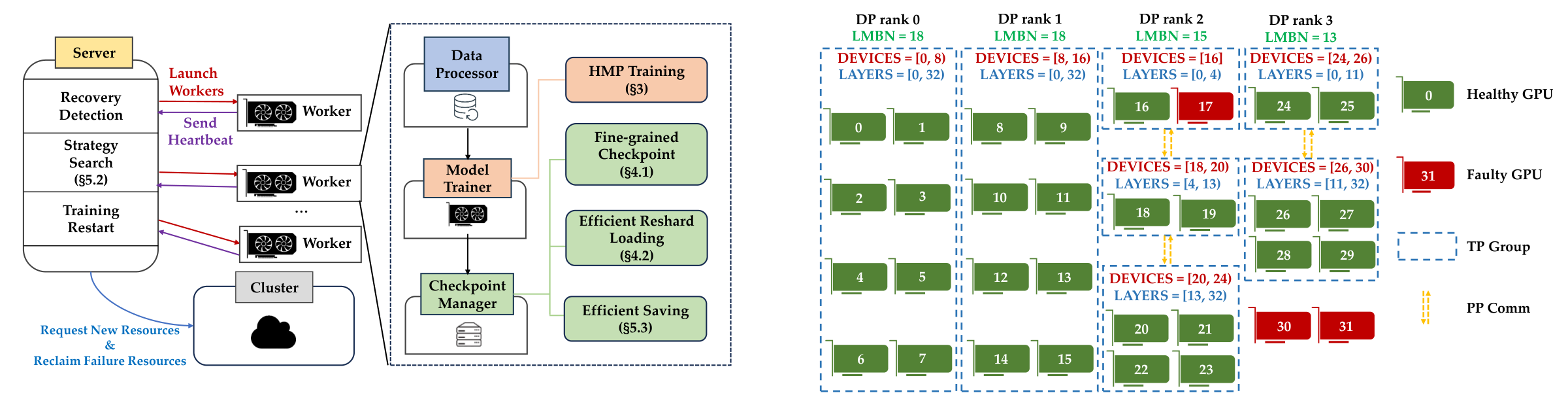
Adapting model partitions and checkpoints to keep training resilient to failures.2025
Xuanyu Wang, Fangcheng Fu, Haoyang Li, Hao Ge, Sheng Lin, Jiawen Niu, Bin Cui
Key contributions+
Elastor studies elastic model partitioning and checkpointing for distributed deep learning training that must tolerate failures. The system coordinates partition changes and checkpoint movement so training can recover efficiently as the available devices change.
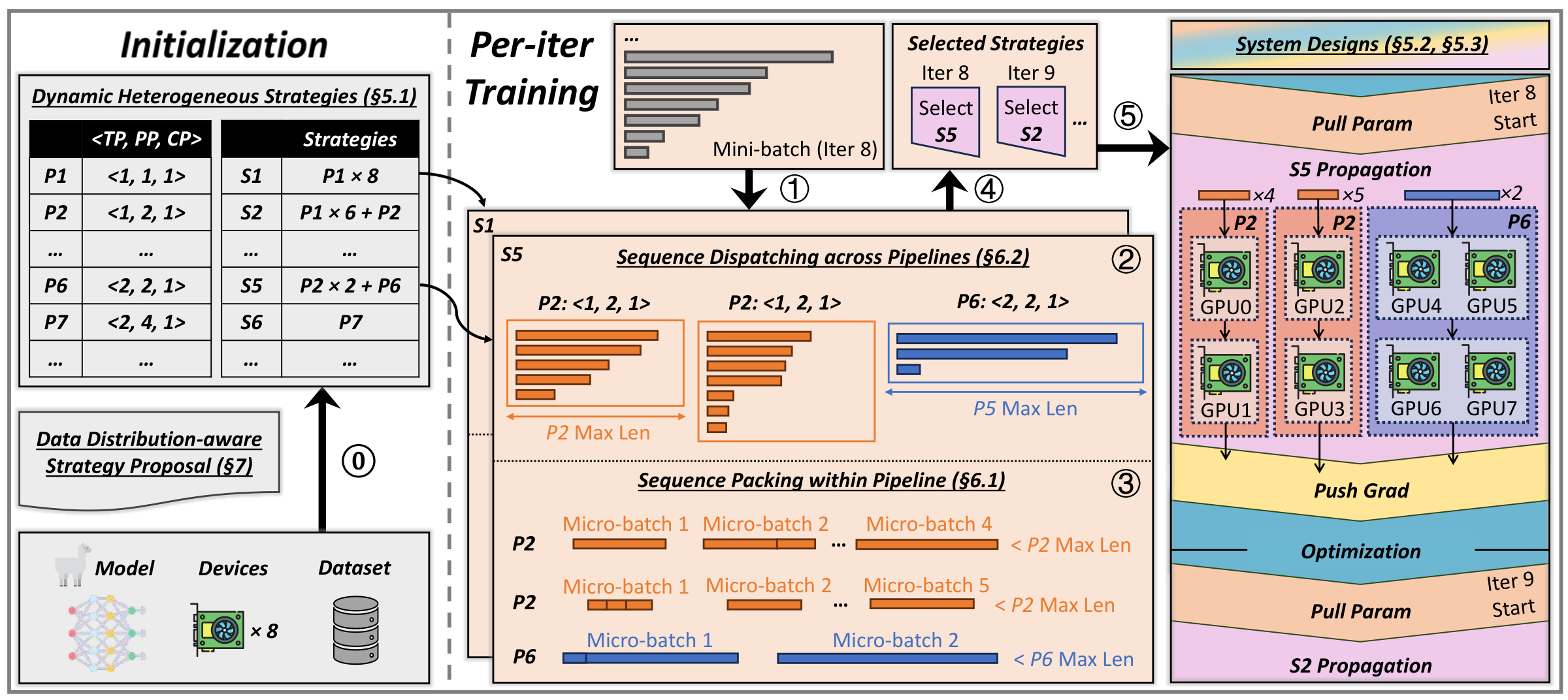
Co-designing parallel strategies and data placement to balance Transformer training.2025
Haoyang Li, Fangcheng Fu, Sheng Lin, Hao Ge, Xuanyu Wang, Jiawen Niu, Jinbao Xue, Yangyu Tao, Di Wang, Jie Jiang, Bin Cui
Key contributions+
Hydraulis co-designs dynamic parallel strategies and data assignment to address sequence-length and packing imbalance in large Transformer training. Its heterogeneous execution plans and two-stage assignment approach improve both per-replica and cross-replica balance.
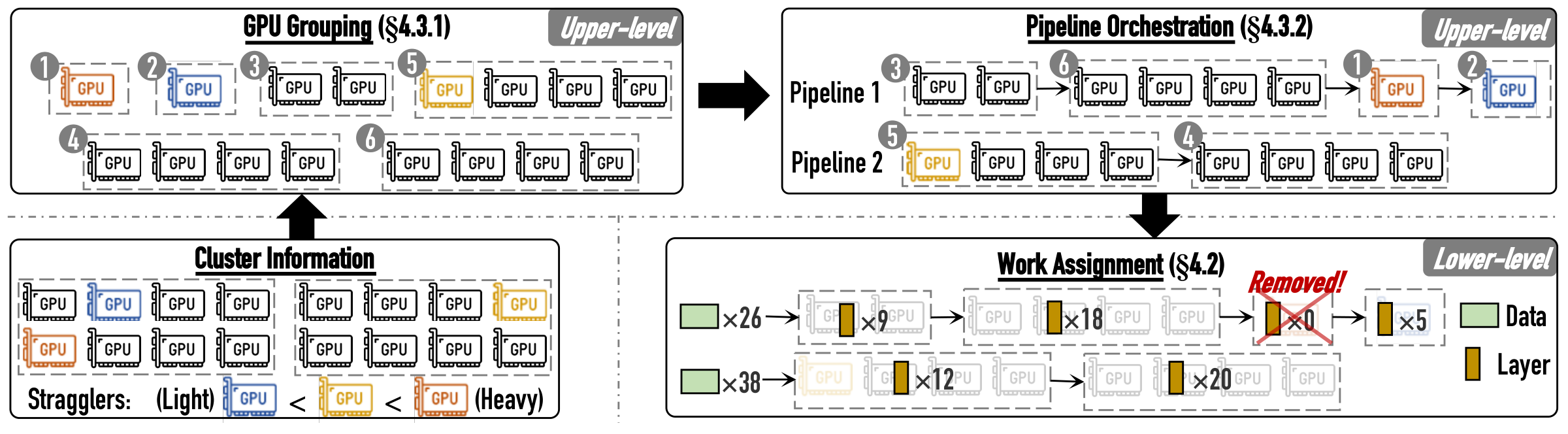
Reshaping data and model parallelism around stragglers.2025
Haoyang Li*, Fangcheng Fu*, Hao Ge, Sheng Lin, Xuanyu Wang, Jiawen Niu, Yujie Wang, Hailin Zhang, Xiaonan Nie, Bin Cui
Key contributions+
Malleus detects stragglers at per-GPU granularity and replans the data, model, and pipeline parallelization when the situation changes. It migrates model state during execution to keep large-scale training efficient and stable.
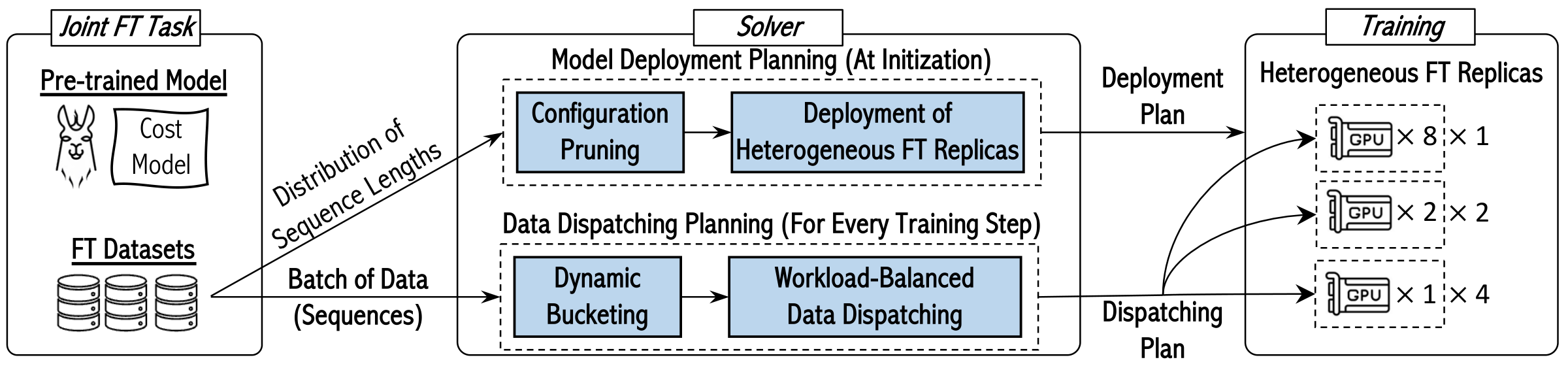
Sharing fine-tuning infrastructure across tenants with diverse data workloads.2025
Sheng Lin*, Fangcheng Fu*, Haoyang Li, Hao Ge, Xuanyu Wang, Jiawen Niu, Yaofeng Tu, Bin Cui
Key contributions+
LobRA jointly trains multiple LoRA adapters while accounting for sequence-length variation and skewness across fine-tuning tasks. Heterogeneous replicas and dynamic data dispatch reduce the GPU seconds needed for multi-tenant fine-tuning.
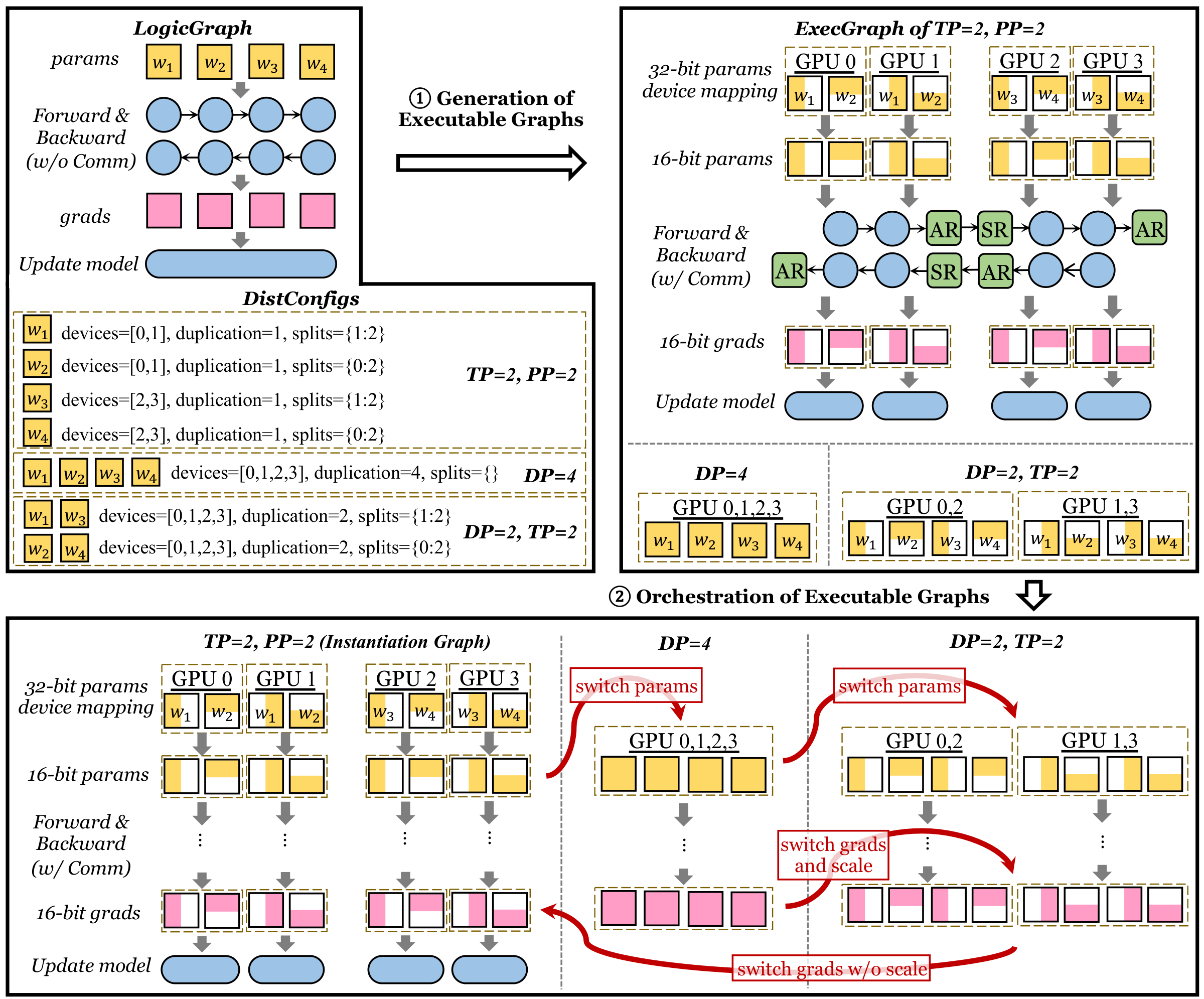
Compiling and orchestrating execution graphs to switch parallelism during training.2024
Hao Ge*, Fangcheng Fu*, Haoyang Li, Xuanyu Wang, Sheng Lin, Yujie Wang, Xiaonan Nie, Hailin Zhang, Xupeng Miao, Bin Cui
Key contributions+
This work enables large language model training systems to hot-switch among parallelism configurations as runtime conditions change. The approach reduces the cost of adapting distributed execution while keeping training progress continuous.
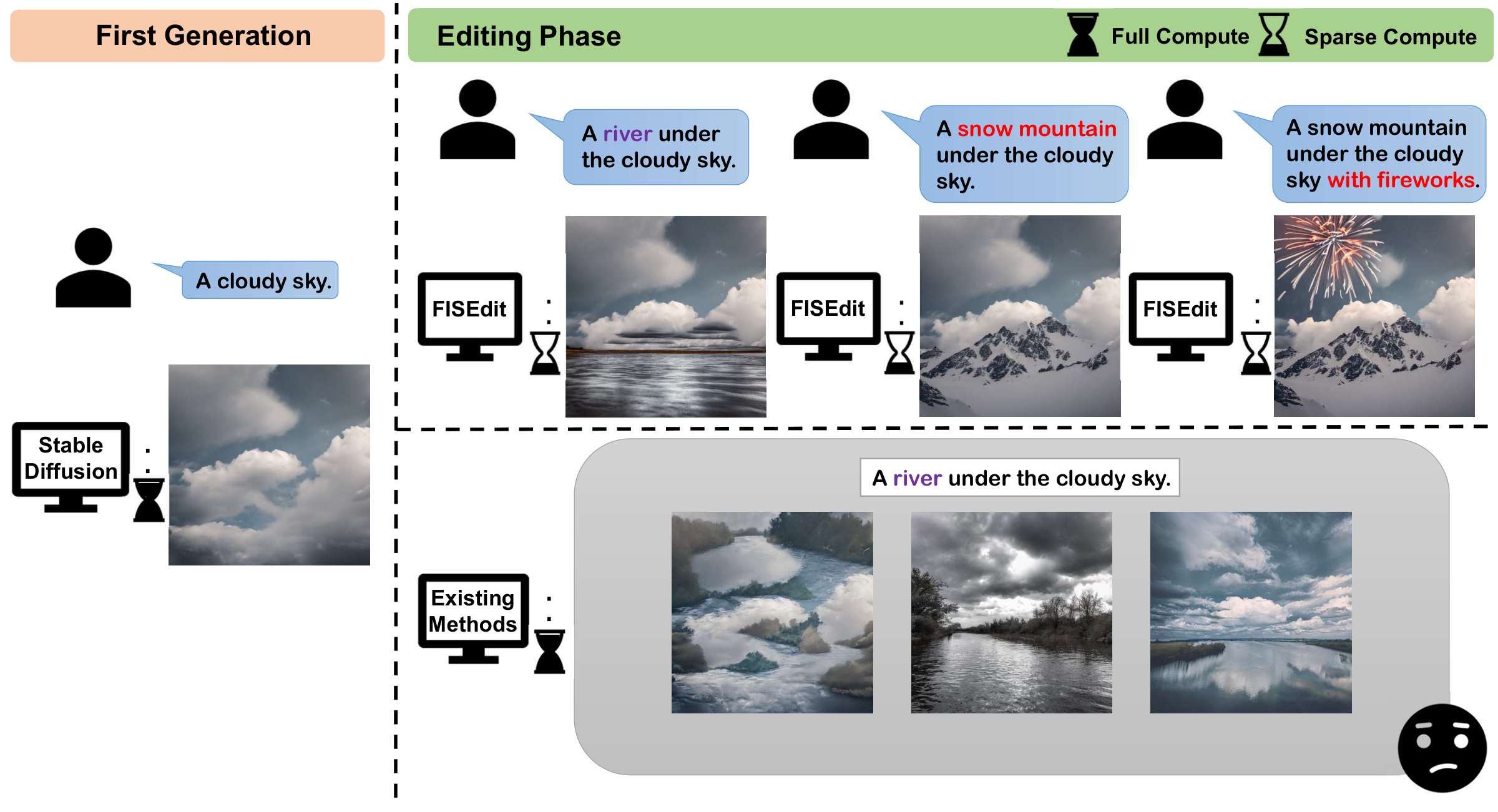
Reusing cached features to accelerate iterative text-to-image editing.2024
Zihao Yu, Haoyang Li, Fangcheng Fu, Xupeng Miao, Bin Cui
Key contributions+
FISEdit accelerates iterative text-to-image editing by identifying the image regions affected by a text change and reusing cached features elsewhere. Its sparse diffusion engine delivers faster inference while maintaining image quality.